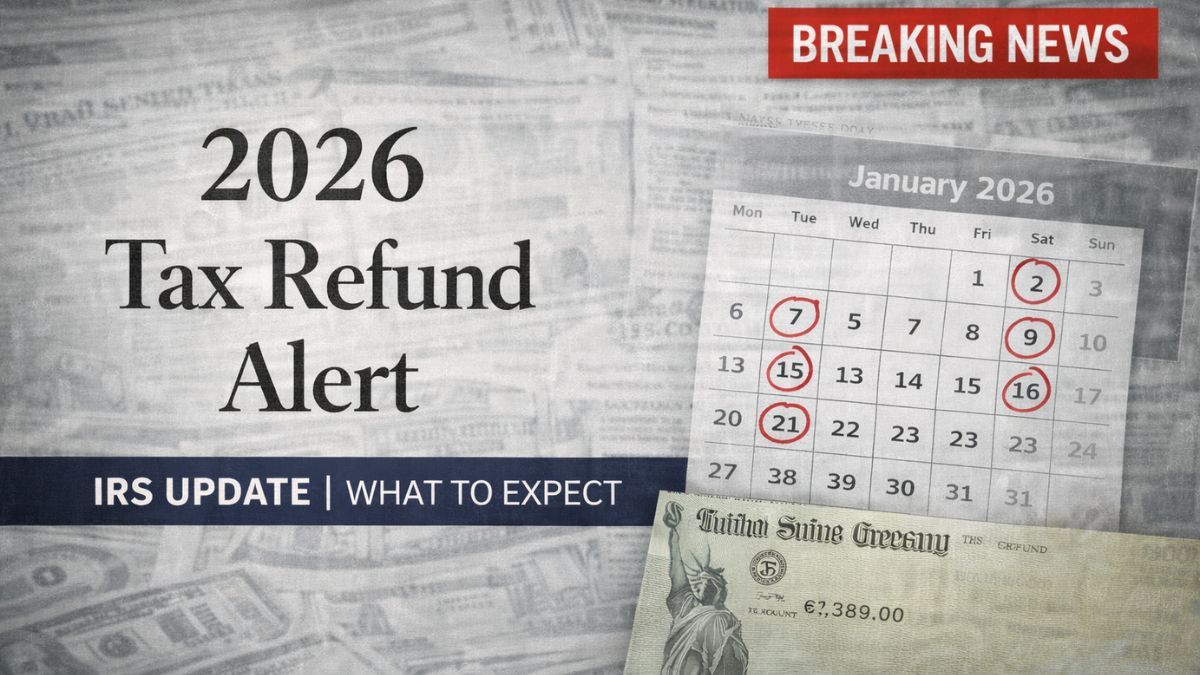
2026 Tax Refund Alert:Waiting for a tax refund can be stressful, especially when you rely on that money for monthly expenses or planned purchases. Understanding how the refund process works can make the experience smoother and help you plan your finances better. For the 2026 tax season, knowing the right timelines, filing methods, and tracking tools will make receiving your refund faster and more predictable.
Getting Your Refund Faster
The quickest way to receive a refund is by filing your tax return electronically and selecting direct deposit. This allows the IRS to process your return efficiently and send the money straight to your bank account. Paper returns or mailed checks take longer because they require manual handling. Generally, taxpayers who e-file and use direct deposit receive their refund within a few weeks, assuming there are no errors or additional review requirements.
When You Can File for the 2025 Tax Year
For income earned in 2025, the IRS is expected to start accepting tax returns in mid-to-late January 2026. Once your return is accepted, the refund process officially begins. However, certain credits, such as the Earned Income Tax Credit (EITC) and the Additional Child Tax Credit, are subject to a legal delay. Refunds claiming these credits cannot be issued before mid-February, even if the return is filed early. This rule helps prevent fraud and ensures the IRS has time to review returns carefully.

Tracking Your Refund Status
You do not have to guess when your refund will arrive. The IRS provides online tools that allow you to check your refund status by entering your Social Security number, filing status, and expected refund amount. These tools update daily, giving you a clear view of your refund’s progress. Creating an online IRS account provides a secure way to monitor your refund from any device, helping you stay informed and confident.
Avoiding Errors and Scams
Refund delays often happen due to simple mistakes, such as incorrect bank information, math errors, or missing details. Carefully reviewing your return before submission can prevent these problems. It is also important to watch out for scams. The IRS never contacts taxpayers by phone, email, or text to ask for personal or banking information. Always rely on official IRS resources for accurate and safe updates.
Planning for a Smooth Refund Experience
Filing electronically, choosing direct deposit, and monitoring your refund status are the best ways to ensure a smooth process. If you claim credits that are legally delayed, expect a slightly longer wait. Being informed and prepared can reduce stress and allow you to plan how to use your refund effectively once it arrives.

Disclaimer: This article is for informational purposes only and does not provide financial, legal, or tax advice. Refund timelines, rules, and IRS policies may change. For the most accurate and up-to-date information, consult the official IRS website or a qualified tax professional.